


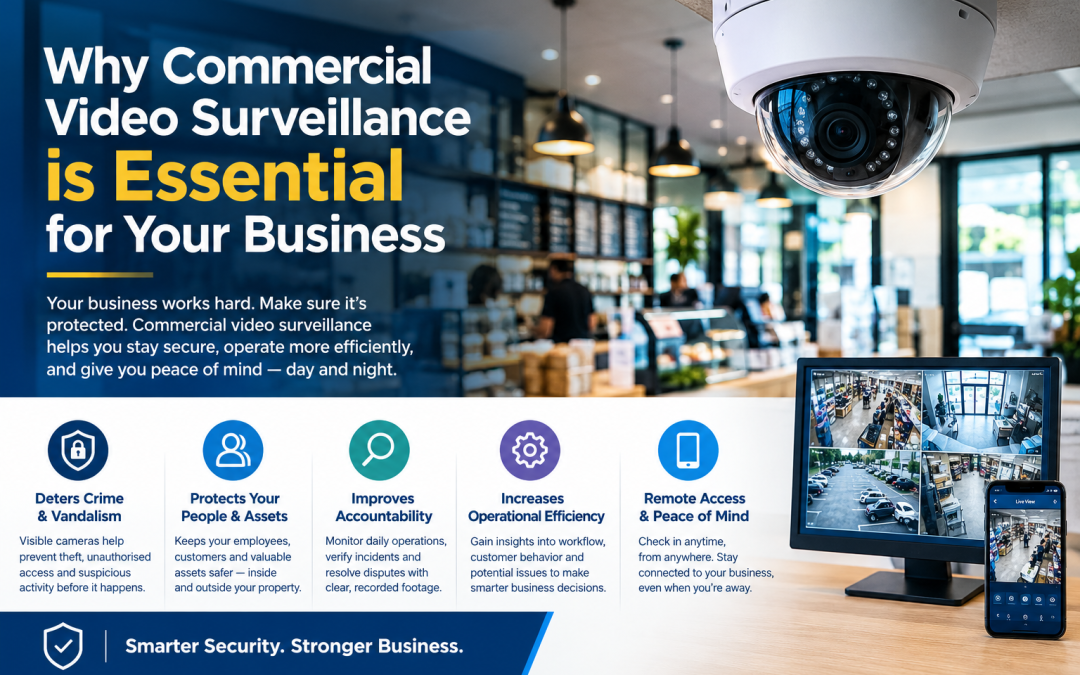
For modern business owners, installing a robust commercial video surveillance system is no longer just an operational option—it is a critical investment in asset protection, risk management, and employee safety. According to recent industry reports, businesses lose billions annually to retail shrinkage, vandalism, and fraudulent liability claims.
Implementing strategically placed security cameras delivers a strong return on investment (ROI) by mitigating threats before they escalate into financial losses. Here are the core reasons why commercial video surveillance is vital for your company.
Key Benefits of Commercial Video Surveillance
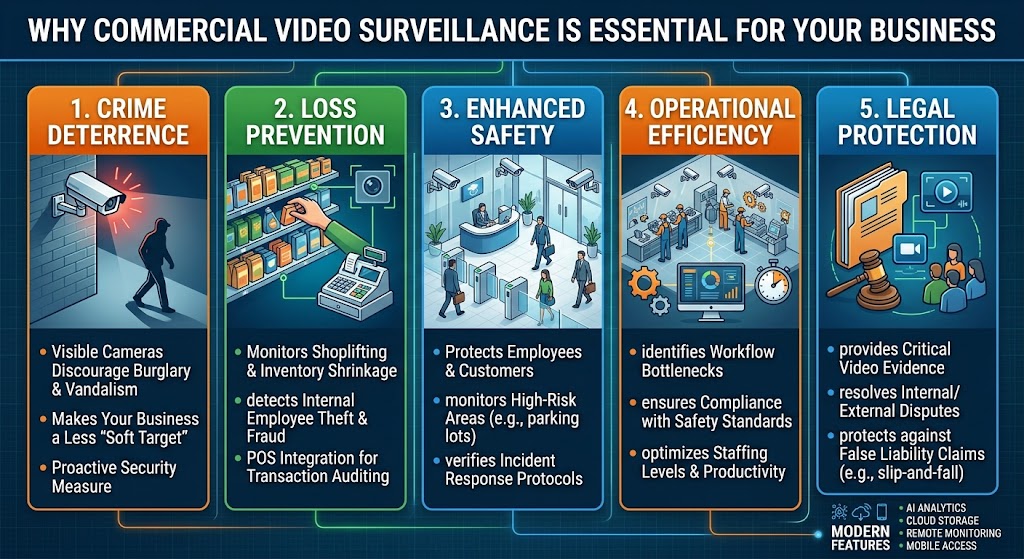
1. Crime Deterrence & Property Protection
The presence of visible security cameras acts as a primary deterrent against external threats, including burglary, trespass, and vandalism.
- Exterior & Perimeter Security: Mounting cameras along perimeters, loading docks, and entry points discourages unauthorized access.
- Evidence Collection: In the event of a security breach, high-definition video footage provides law enforcement with vital evidence to identify suspects and assist in asset recovery.
- Internal Loss Prevention: Cameras positioned in inventory rooms and cash-handling areas significantly reduce internal employee theft and inventory shrinkage.
2. Enhancing Workplace & Employee Safety
A secure working environment boosts employee productivity and peace of mind.
- Parking Lot & Building Access: Installing cameras in parking structures and walkways ensures staff can enter and leave the premises safely, particularly during late-shift hours.
- Harassment & Misconduct Prevention: Video documentation helps prevent workplace misconduct, customer harassment, and internal disputes by maintaining a clear, unbiased record of events.
- Emergency Response: Integrated commercial video surveillance systems allow security personnel to monitor incidents in real time during emergencies.
3. Liability Protection & Dispute Resolution
Unsubstantiated lawsuits and fraudulent injury claims can devastate a business financially.
- False Slip-and-Fall Claims: Surveillance records provide objective proof against fraudulent liability claims, protecting your business from unnecessary legal fees and insurance payouts.
-
Transaction Verification: In retail and service environments, cameras above point-of-sale (POS) registers provide clarity on customer exchanges, purchase disputes, and receipt verifications.
Traditional vs. Modern Commercial Surveillance Systems
| Feature | Legacy Analog Systems | Modern IP & Cloud CCTV |
| Video Resolution | Standard Definition (Blurry) | 4K High-Definition & Ultra-HD |
| Remote Access | Local Monitor Only | 24/7 Mobile & Browser Access |
| System Integration | Standalone | Integrates with Access Control |
| Analytics | Manual Review Only | AI Motion Detection & License Plate Recognition |
Advanced Integration: Unifying Your Security Ecosystem
To achieve maximum protection, modern video surveillance should not operate in isolation. Integrating your security cameras with enterprise commercial alarm systems and smart intercom systems allows your security team to verify alarms visually before dispatching emergency services, reducing costly false alarm fees.
For multi-site facilities or gated properties, combining video coverage with automated access control gates ensures complete oversight over who enters and exits your facility.
Frequently Asked Questions About Commercial Surveillance
1. Where should commercial security cameras be placed?
Cameras should be installed at all primary building entrances and exits, cash handling areas, inventory warehouses, building perimeters, and employee parking lots.
2. Can I view my commercial security cameras remotely?
Yes. Modern IP and cloud-based video surveillance systems allow business owners and security personnel to view live and recorded footage 24/7 from smartphone apps or web browsers.
3. How long is commercial surveillance footage usually stored?
Most commercial systems store video footage for 30 to 90 days, depending on industry compliance requirements, local regulations, and storage capacity (cloud or NVR/DVR).
4. How does video surveillance integrate with access control?
Integrating cameras with access control systems pairs video clips with specific badge scans, allowing you to visually verify who entered a secure door or gate at any precise time.
5. What is the average cost of commercial video surveillance installation?
Costs vary based on property size, camera count, resolution requirements, and storage needs. Request a free custom quote to get an accurate estimate tailored to your facility.
Protect Your Business with Dyezz Surveillance
Whether you need a new system design, an equipment upgrade, or full security integration, about Dyezz Surveillance highlights our decades of experience protecting commercial properties across Texas.
Explore our full suite of commercial security services or contact our safety experts today for a free on-site security consultation.